Outreach-Collaboration with St. Paul Millennium Medical College (SPMMC) in Addis Ababa
July 31, 2026
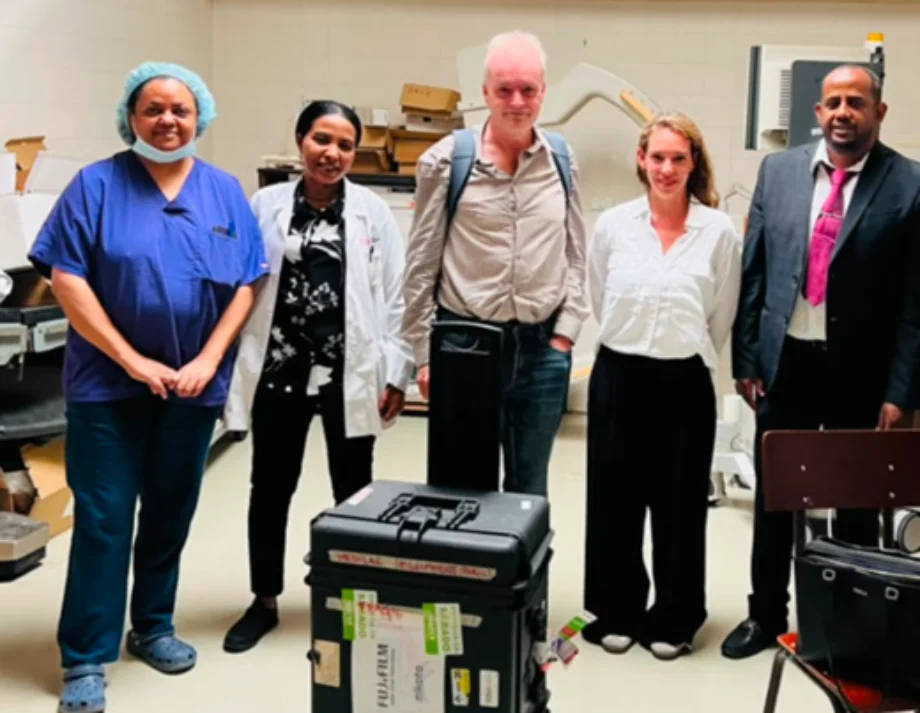
Tutors: Prof. Lars Aabakken, Dr. Nina Oehler
St. Paul Millennium Medical College (SPMMC) in Addis Ababa, Ethiopia, has been our most reliable partner institution since 2017, hosting six previous training courses in addition to numerous other collaborative activities, particularly research projects. This year, the faculty included Dr. Nina Oehler from Málaga, Spain, making her debut in Ethiopia, which proved to be a great success.
The Hospital
SPMMC still has several major construction projects underway, although the new oncology block has yet to become fully completed and operational. The endoscopy unit remains largely unchanged, apart from some replacement of equipment. During this visit, the available endoscopy equipment consisted of two sigmoidoscopes, two gastroscopes, and four duodenoscopes, all from Fujifilm and Storz.
The unit is staffed by five highly competent consultants, led by Dr. Miftah Dehlil, in addition to three first-year and three second-year fellows rotating through endoscopy. Ten endoscopy nurses rotate between the two teaching towers, admissions and discharges, and endoscope reprocessing. We were also informed that the decision to acquire a dedicated C-arm and the necessary ERCP equipment is currently awaiting final approval by the Ministry of Health.
Access to accessories remains a major issue, with the vast majority still obtained through donations. Micro-Tech has again been exceptionally supportive of our activities in Africa.
Our training course
Following the training model we have developed over the years, we organized a 3-day course with approximately 20 participants, including in-house fellows and a small number of additional physicians from the region. Nurses from the hospital participated in at least part of the lecture program and were deeply involved in the hands-on training sessions.
All procedures were performed by fellows under the supervision of senior fellows and faculty members as needed. Between 20 and 30 procedures were completed during the course, including 4 esophageal stent placements for squamous cell carcinoma and 2 cases of colorectal cancer. A few straightforward polypectomies were performed, while no variceal ligations were required, although several patients were evaluated for that indication.
For esophageal stenting, the hospital currently benefits from reliable access to inexpensive or donated stents, greatly facilitating treatment for these patients.
Dr. Nina Oehler brought a Mikoto colonoscopy simulator, which was made available to all fellows. Simulator training between live cases proved extremely valuable, and we hope to expand this component in future courses, particularly for first-year fellows and others with limited hands-on experience. We also performed two ERCP cases in the interventional radiology unit. Dr. Miftah Dehlil demonstrated remarkable progress since our previous visits. Overall, the trajectory of the ERCP program appears to be steadily improving.
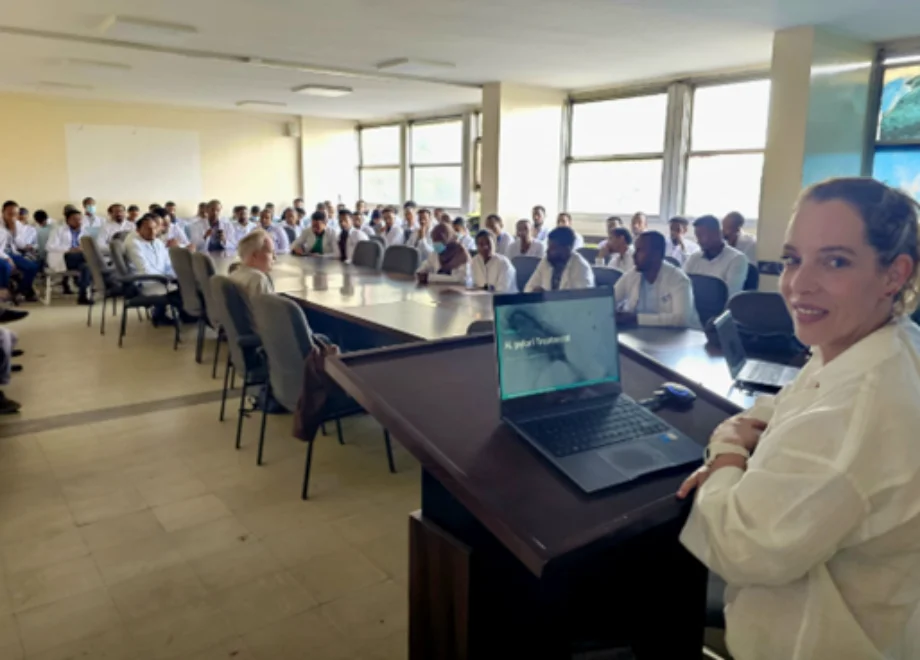
The course included daily didactic lectures, with two or three presentations each day covering topics highly relevant to the audience. These included quality in colonoscopy, updated strategies for Helicobacter pylori eradication, polypectomy techniques, and the basic principles of ERCP. Each lecture generated extensive discussion, particularly regarding how these topics could be adapted to the practical realities of clinical practice in Ethiopia. Fellows also presented their research projects, contributing further to the academic discussions. Attendance was excellent, and the discussions were lively, suggesting that the selected topics were highly relevant.
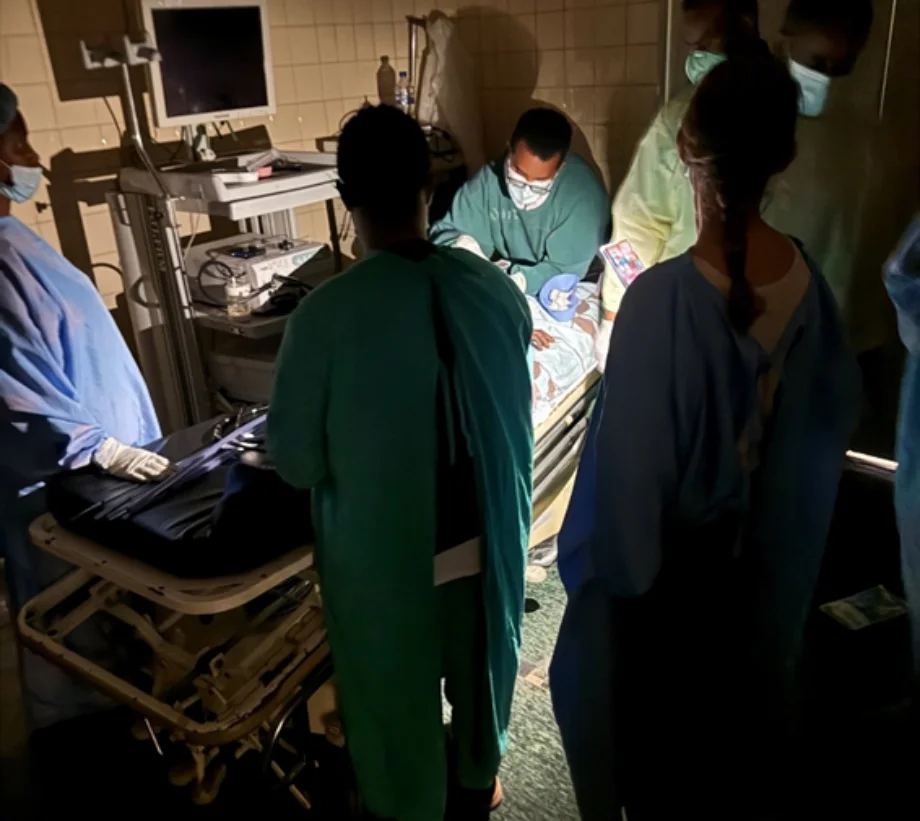
A complete power outage occurred on the final afternoon. This forced the cancellation of the final esophageal stent placement and resulted in a more intimate version of Dr. Oehler's final lecture. Unfortunately, it also prevented the planned live transmission from Oslo, which had been fully prepared.
Conclusion
This course’s greatest value lies in the opportunity for in-depth discussions with the local team regarding future development, a deeper understanding of their specific needs, identification of critical issues, including bowel preparation and inventory management, and exploration of future research opportunities. Finally, meeting with the hospital leadership may facilitate further improvements.
The opportunity to meet our local colleagues adds a dimension to these visits that extends well beyond skills development and didactic teaching. We very much hope to continue this collaboration in the years to come.