As Chair of the Scientific Committee for ENDO 2026, what is your overarching vision for this conference?
Dr. Nonthalee Pausawasdi: My overarching vision for ENDO 2026 is to create a truly global and inclusive scientific platform that reflects the evolving innovations in endoscopy while highlighting region-specific challenges and perspectives. We aim to make bridges from cutting-edge advances to real-world clinical practice, ensuring that developments in technology, artificial intelligence, and therapeutic endoscopy translate into meaningful improvements in patient care across diverse healthcare systems.
ENDO 2026 is intentionally designed to amplify voices from every region, particularly emerging economies, and to address diseases and clinical challenges highly relevant to low- and middle-income countries. The program embraces a multidisciplinary approach, bringing together gastroenterologists, endoscopists, surgeons, and allied specialists to foster collaboration and comprehensive patient care.
WEO News: Why South Africa, and what unique opportunities does this location present for attendees?
Dr. N.P.: ENDO 2026 on the African continent reflects our commitment to global equity in endoscopy education and collaboration. South Africa offers a unique convergence of high-level medical expertise, diverse disease burden, and a rapidly developing endoscopy community. It provides attendees with exposure to pathology and clinical challenges that may be less commonly encountered elsewhere, including infectious diseases, parasitic GI disorders, and advanced presentations of GI malignancies. Beyond the science, South Africa offers extraordinary cultural diversity, history, and natural beauty. It will be both an intellectually and personally enriching experience.
WEO News: What are the major challenges you’ve faced in organizing a conference of this magnitude in South Africa?
Dr. N.P.: Organizing a global congress of this scale always involves logistical complexity but hosting it in a region where large-scale international medical congresses are less frequent adds additional layers, including infrastructure coordination, fundraising, global travel accessibility, and ensuring equitable participation from all regions.
However, these challenges have been energizing rather than discouraging. They push us to be more innovative in creating opportunities that support trainees and colleagues from resource-limited settings.
WEO News: What’s new about ENDO 2026? How does this conference differ from previous years?
Dr. N.P.: ENDO 2026 is designed to be more integrated, with strong interdisciplinary collaboration at its core — bringing together gastroenterologists, advanced endoscopists, surgical endoscopists, and surgeons in a unified scientific program. The congress will feature global disease-focused sessions that highlight regional pathology, particularly from Africa, and address the realities of practicing in resource-limited settings. At the same time, ENDO 2026 will uphold the hallmark strengths of the WEO congresses, showcasing innovation, breakthrough technologies, and the latest advances that are shaping the future of endoscopy worldwide.
WEO News: Can you give us a glimpse of what attendees can expect – any highlights you’re particularly excited about?
Dr. N.P.: Attendees can expect a dynamic and comprehensive scientific program, including:
1. High-impact, state-of-the-art lectures by global leaders
2. Expert debate on controversial and practice-changing topics
3. Live demonstrations broadcast from leading centers around the world
4. Dedicated sessions focused on endoscopy in resource-limited settings
5. Emerging leaders’ forums and structured mentorship roundtables
6. Masterclasses designed to elevate practical skills
7. Updated endoscopy practice guidelines
8. Multidisciplinary approaches to challenging clinical scenarios
I am particularly excited about sessions exploring how advanced imaging and emerging technologies will redefine endoscopic practice, quality metrics, and performance standards, and importantly, how these innovations can be adapted across diverse healthcare systems, not just in high-resource environments.
WEO News: What do you hope attendees will take away from ENDO 2026?
Dr. N.P.: I hope attendees leave with new knowledge that is immediately applicable to their clinical practice, meaningful collaborations that transcend geographic boundaries, and renewed inspiration, with the sense that they are part of a global movement advancing patient care. A great conference does more than disseminate information: it shifts perspectives, strengthens connections, and drives progress.
WEO News: Let’s talk about your personal journey. Can you briefly share what drew you to gastroenterology and endoscopy, and your primary areas of expertise?
Dr. N.P.: I was drawn to gastroenterology because it uniquely combines cognitive medicine with highly technical procedural skills. Endoscopy, in particular, offers immediate diagnostic clarity and therapeutic impact, that is deeply rewarding. I have been fortunate to have opportunities to expand my global network by working with several international organizations, as well as WEO, namely the World Gastroenterological Organization (WGO), Asian Pacific Association of Gastroenterology (APAGE), Asian EUS Group (AEG), Gastrointestinal Endoscopy Taskforce Asian Pacific (GI-TAP), and Women in Gastrointestinal Network Asia Pacific (WIGNAP). The international collaboration allows me to work on many projects to improve the quality of endoscopy training in underserved areas worldwide. My areas of expertise include endoscopic ultrasound, ERCP, endohepatology, pancreaticobiliary diseases, bariatric endoscopy, and therapeutic endoscopy.
You’re balancing clinical practice, major leadership roles, research, and personal life. How do you manage it all without burning out?
Dr. N.P.: To be honest, I have often felt overwhelmed by the demands of balancing clinical work, leadership responsibilities, and research. Over time, however, I have learned to embrace these opportunities – to lead, to build a meaningful clinical practice, and to serve as a principal investigator or collaborator in impactful research. I am fortunate to work alongside an exceptional team. Meaningful achievements are never the result of individual effort alone; they are built on trust, collaboration, and shared vision.
Above all, I prioritize health. Without physical and mental well-being, sustained excellence is not possible. Protecting one’s health is not a luxury — it is the foundation that enables us to serve patients, advance science, and lead effectively.
WEO News: Many endoscopists struggle with time management. What practical advice would you give to colleagues who feel overwhelmed?
Dr. N.P.: I will share with you the advice I got from many of my mentors. However, I haven’t been able to master these tips! (1) Differentiate urgency from importance, not everything urgent is important. (2) Protect focused time. (3) Learn to say “no”. Every “yes” carries an opportunity cost.
Burnout often results not from workload alone, but from lack of control over one’s schedule.
WEO News: For young endoscopists reading this, what advice would you give about building a meaningful career in this field?
Dr. N.P.: Strive for technical excellence while upholding the highest standards of professional integrity. Seek mentors who challenge and inspire you. Publish thoughtfully, contribute meaningfully to the literature, and cultivate a focused area of expertise that defines your niche. Reputation is not built overnight; it is earned through persistence, patience, and consistent effort over many years. Most importantly, remain a lifelong learner. Endoscopy is evolving rapidly, and those who continue to grow will shape the future of the field.
WEO News: What do you see as the future of endoscopy over the next 5–10 years?
Dr. N.P.: I see AI-assisted endoscopic procedures, robotic and computer-assisted navigation, expansion of therapeutic interventions, both endoluminal resection and EUS-guided. Precision endoscopy integrating molecular diagnostics. Endoscopy will become more predictive, more personalized, and increasingly therapeutic.
WEO News: Finally, what message would you like to share with potential attendees to encourage them to join us in South Africa?
Dr. N.P.: ENDO 2026 will not just be another congress; it will be a landmark moment for global endoscopy.
Join us in South Africa to learn, to collaborate, and to help shape the future of our field. Whether you are an experienced expert or an early career endoscopist, you will leave inspired and empowered.
We look forward to welcoming the world.
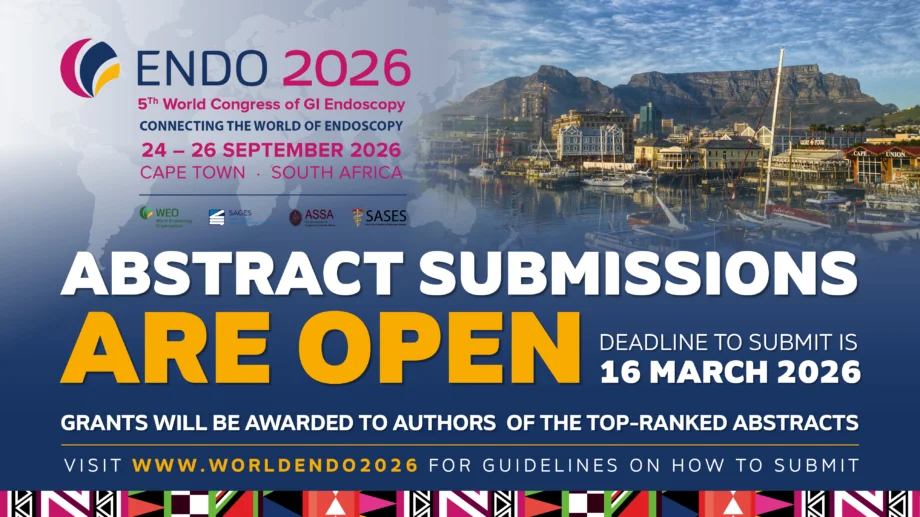
ENDO 2026 will be held September 24–26 in Cape Town, South Africa. Registration information available at www.worldendo2026.org