In 2025 and early 2026, WEO continued its strong commitment to GI endoscopy training across Africa. Through site visits, hands-on courses, live case sessions, and close collaboration with local leaders, we focused on one clear mission: strengthening local capacity and creating sustainable training networks that last.
Morocco and Algeria (early 2025)
We began the year with outreach and assessment visits. The focus was simple:
· Connect with local GI leaders
· Understand real training needs
· Explore future collaborations
These visits helped us build trust and identify where WEO training programs can make the greatest impact.
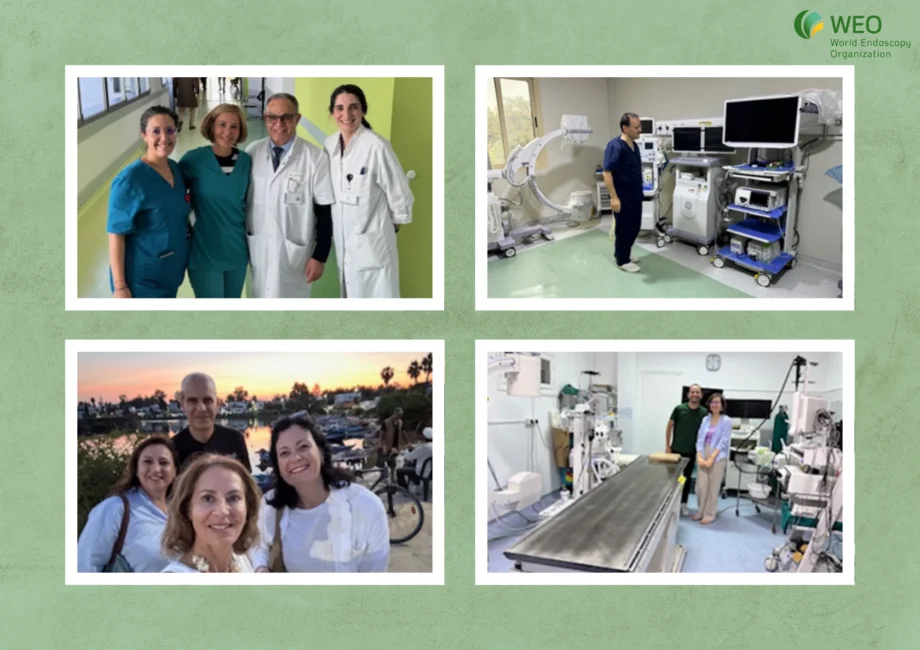
Tunis, Tunisia (June 2025)
In Tunis, we visited four hospitals, observed procedures, and had in-depth discussions with trainers. The enthusiasm was clear. There is strong interest in building ongoing GI training programs.
Prof. Purnima Bhat, Outreach Africa Committee Co-Chair, shared:
“Endoscopy in the Maghreb is progressing, though challenges remain in building capacity and advancing endoscopy techniques. These can be addressed through WEO’s outreach training program and by selecting promising individuals for advanced training abroad, who can later train others. I encountered an enthusiastic, talented group of potential trainers keen to help advance training in Africa. Their proficiency in French, English, and Arabic makes them ideal for training across the continent. Most high-quality endoscopy occurs in the private sector, and the academic motivation could lead these professionals to contribute to endoscopy training across Africa.”
She also highlighted Tunisia’s potential:
“The dedication and vision of local champions and the cooperation of the National Society present Tunisia as a promising partner for WEO in the advancement of GI services in the region and potentially an excellent source for recruiting trainers for sub-Saharan Africa.”
Tunisia has clearly emerged as a potential regional hub for future training.
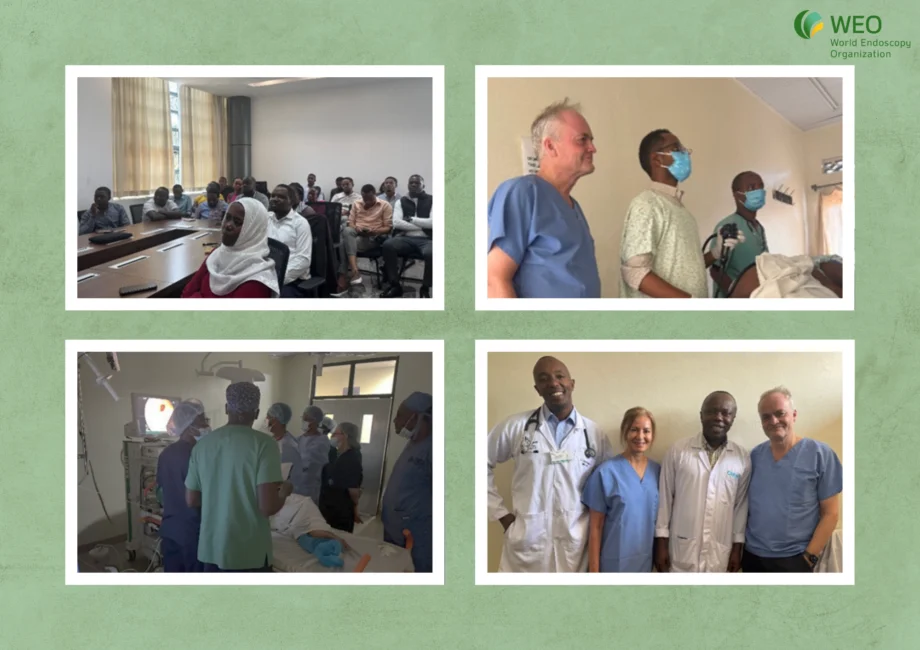
Kigali, Rwanda (June 4–6, 2025)
Our 3-day visit to Kigali brought together 30 professionals, including three fellows. The program included teaching sessions and primarily observation of procedures, along with open discussions with the local team.
The visit also gave us a broader impression of the country and its healthcare environment. As shared by Prof. Purnima Bhat and Prof. Lars Aabakken:
“In general, the country appears very well developed, good houses and cars (and swarms of taxi-motorcycles). Beautiful hilly city, and apparently safe streets. Very friendly and helpful colleagues.”
The professionalism and warmth of the local colleagues stood out throughout the visit.
While this visit focused mainly on observing procedures and exchanging experience, WEO aims to return with a more comprehensive, structured hands-on training program. The goal is to further strengthen local skills and support long-term development of GI endoscopy services in Rwanda.
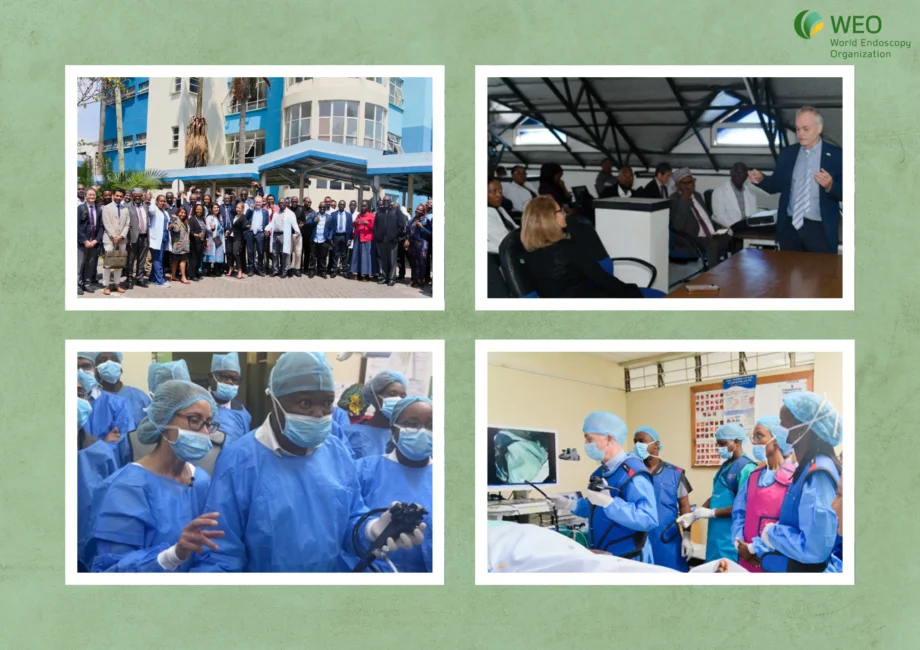
Nairobi, Kenya (July 30, 2025)
This was a powerful gathering. A 3-day conference followed by a 1-day hands-on workshop brought together 130 participants from 10 countries, including 25 hands-on trainees.
Prof. Purnima Bhat and Prof. Lars Aabakken reported:
“This event was an example of activities hosted and run by a WEO training center, with ample participation by WEO faculty, although Prof. Elly Ogutu was himself responsible for the program and financing. The role of WEO was as partners for discussion of the program, hands-on tutoring, and procedural demonstrations, during the hands-on workshop. The presence there and at the subsequent conference allowed ample time and opportunity for connecting with colleagues from the entire African continent. All in all: Quite intense meeting but with great output, for participants, as well as for us and WEO.”
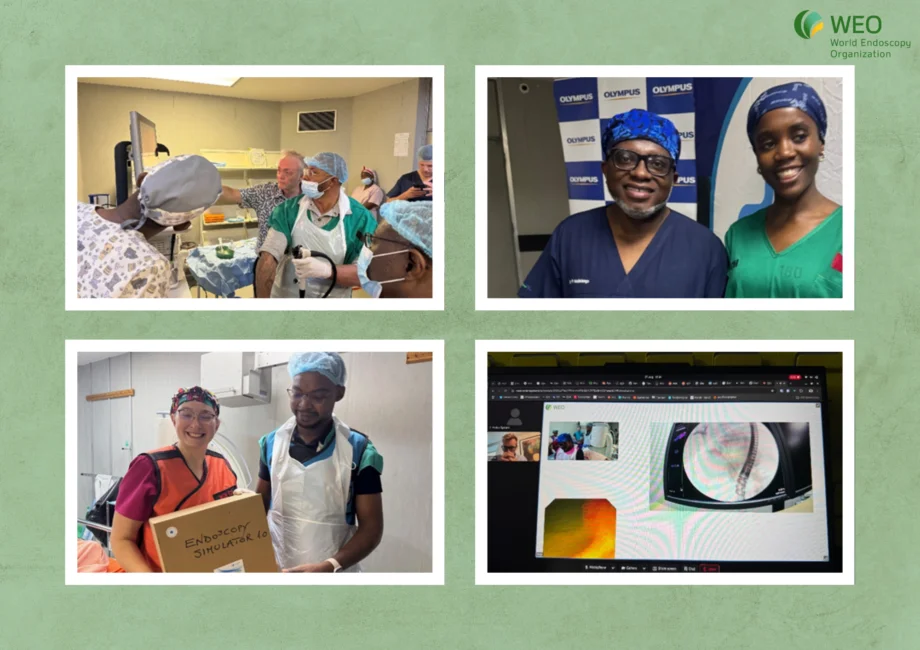
Windhoek, Namibia (August 25–27, 2025)
This 3-day live case training welcomed 17 doctors and 22 nurses.
We introduced ERCP training, simulation, and telementoring. The progress since previous visits has been impressive.
Prof. Lars Aabakken and Anders Egeland shared:
“The situation is very much improved compared to our previous visit to Windhoek 3 years ago. The training environment, the engagement of the nurses and the superb leadership of Dr. Nashidengo was truly inspirational, and the support from the distributors of Olympus and Micro-Tech certainly added to the educational output of the course. We acquired vital experience with the telementoring system, and plan to install this package here and at our other training centers once finalized. We surely to aim for regular training activities in Windhoek.”
As mentioned above, highlights of this visit were I engagement of nurses and the strength of the local leadership.
Addis Ababa, Ethiopia (December 16–18, 2025)
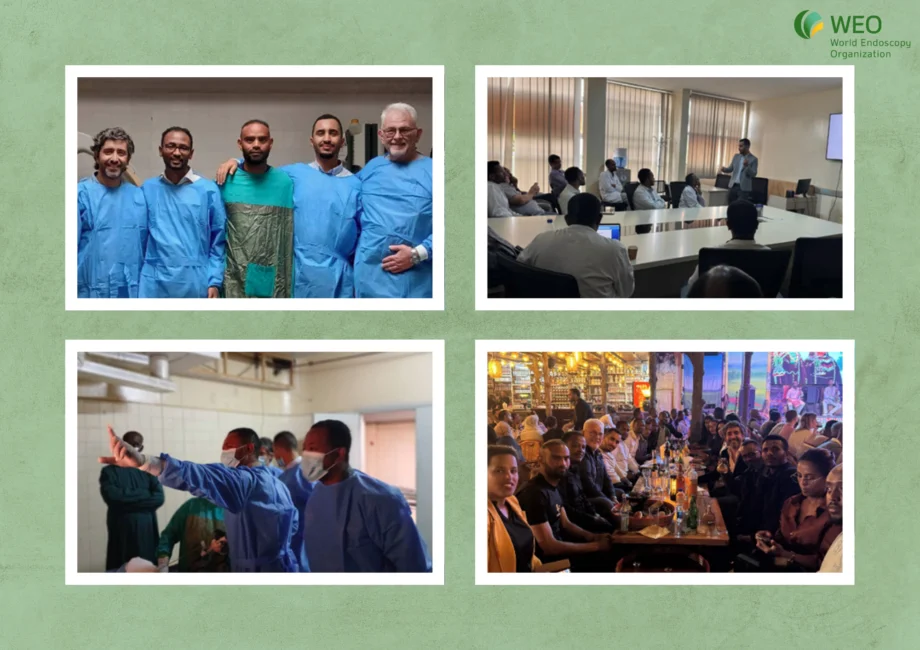
A 3-day training visit brought together around 20 senior doctors and fellows. The program included:
· Two lecture sessions
· Multiple hands-on cases
· A focused talk on variceal treatment
· Strong nurse involvement and excellent logistical support
Djilani Bouberra reflected:
“Having animal model training, either ex vivo or in vivo, is crucial. It helps trainees learn in a safe environment and ensures that even if the caseload is not enough, the trainees can still receive proper training and benefit the most from the experts. I appreciated the generosity and kindness of the Ethiopian people – things you could sense all the time during the course, from the food to the way they care for guests.”
Dario Ligresti added:
“During the whole course, I experienced a high level of interaction between the local team and us. I really hope that they took advantage of our presence. I personally came back home with a lot of new learnings (many of them non-medical…) in my suitcase, which somehow changed my approach to the too-fast Western culture!”
The collaboration and warmth left a lasting impression.
Dar es Salaam, Tanzania (January 26–28, 2026)
This 3-day training visit included procedure observation and detailed discussions with trainers, with strong faculty engagement.
Despite political protests that required rescheduling, the course was managed safely and successfully, made possible by the flexibility and cooperation of local partners.
What we achieved together
Across these countries, our collaboration included:
· Site visits and hospital assessments
· Live case demonstrations
· Hands-on workshops
· Simulation and ERCP introduction
· Equipment, accessories, and on-site technical support
We gained valuable insight into regional needs, training gaps, and future opportunities. More importantly, we strengthened relationships and built a foundation for long-term programs.
The mission remains clear: empower local professionals, develop future trainers, and expand sustainable GI endoscopy services across Africa.
With gratitude…
A heartfelt thank you to Prof. Purnima Bhat for her leadership and vision, to Prof. Lars Aabakken, WEO President, for his commitment and guidance, and to all the dedicated tutors and local champions who made these activities possible.
We also sincerely thank Micro-Tech and Olympus for their support of this program. This collaboration has strengthened training quality in multiple countries.
Together, we look forward to continuing and expanding this important work in the years ahead.